The Power Booster
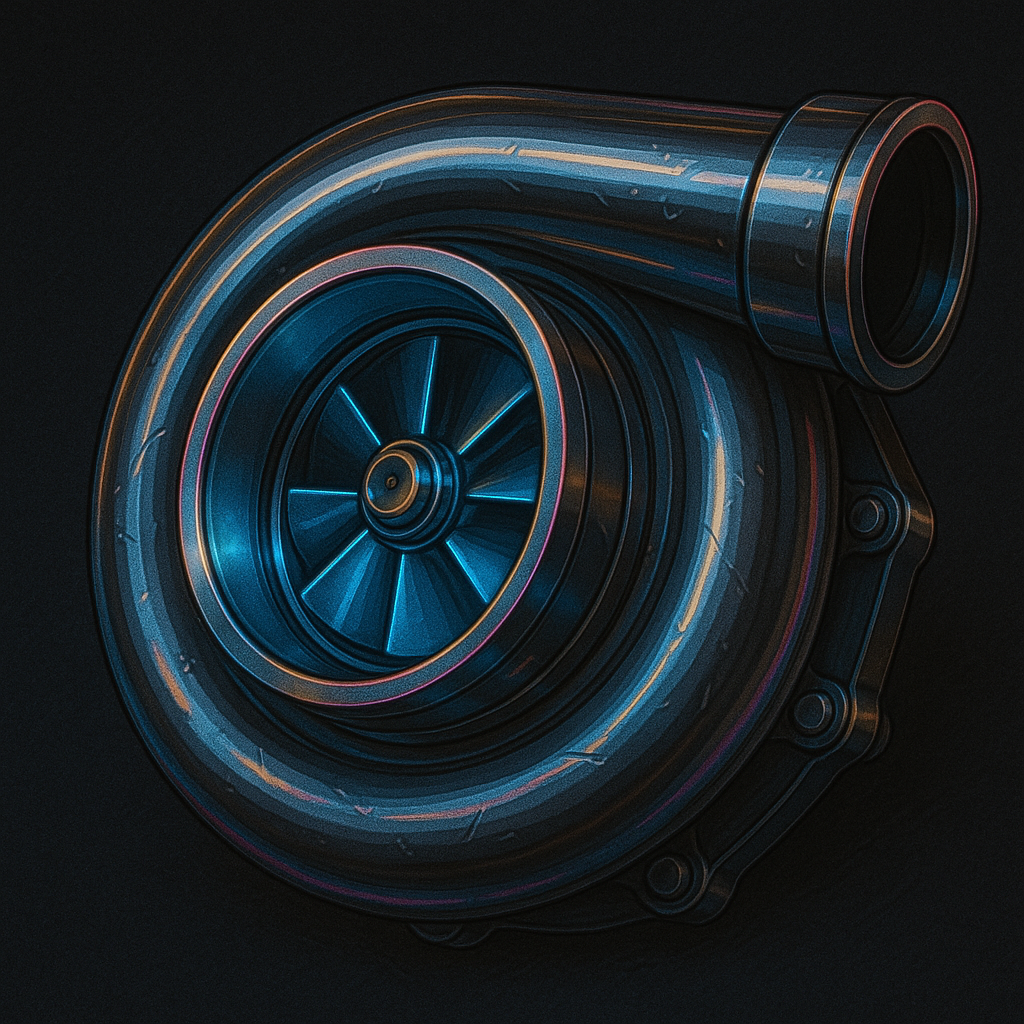
A turbocharger is one of the most popular ways to make a car faster without making the engine bigger. It uses your car’s exhaust gases — the hot air that would normally be wasted — to spin a turbine and push more air into the engine. More air = more oxygen = more fuel can burn = way more power.
How It Works
Exhaust gases leave the engine after combustion. Instead of going straight out the exhaust, they pass through the turbo. The exhaust spins a turbine wheel on one side of the turbo. That turbine is connected by a shaft to a compressor wheel on the other side. The compressor pulls in fresh air, squeezes (compresses) it, and sends it into the engine. Now your engine is breathing way more air than it could on its own — that’s why it feels like a jet when boost kicks in
Why It's So Powerful
Recycles exhaust energy: instead of wasting it, the turbo uses it to make more power. More efficient: small engines can make the same power as bigger ones. Better fuel economy (sometimes): because you get power only when you need it. Huge tuning potential: change boost pressure → instant power gains. Example: A 2.0L turbo engine can make the same power as a 3.0L or even 3.5L engine. More boost = more power… but too much = engine boom.
Types of Turbos
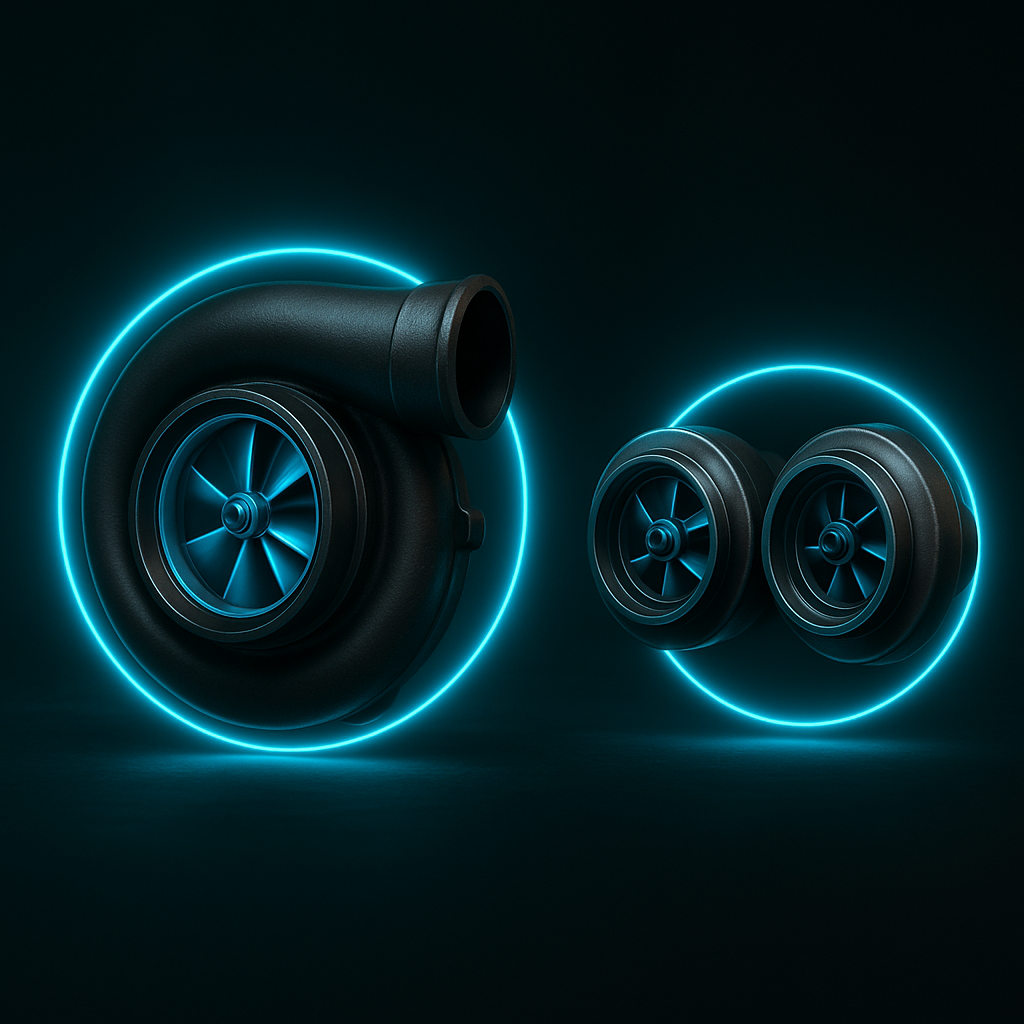
Single Turbo
Has one turbocharger for the entire engine. It uses all the
exhaust gases to spin one turbine. Easier, lighter, and cheaper to install. Boost builds
a bit slower (called turbo lag) because one turbo has to handle all the air. Great for
tuning — simple setup and easier to control.
Twin Turbo
Uses two turbos
instead of one. Each turbo handles half the engine’s cylinders (like one for each
bank in a V6 or V8). They work together to build boost faster and smoother. Feels more
responsive — boost comes on earlier and stronger.