Instant Power, No Lag
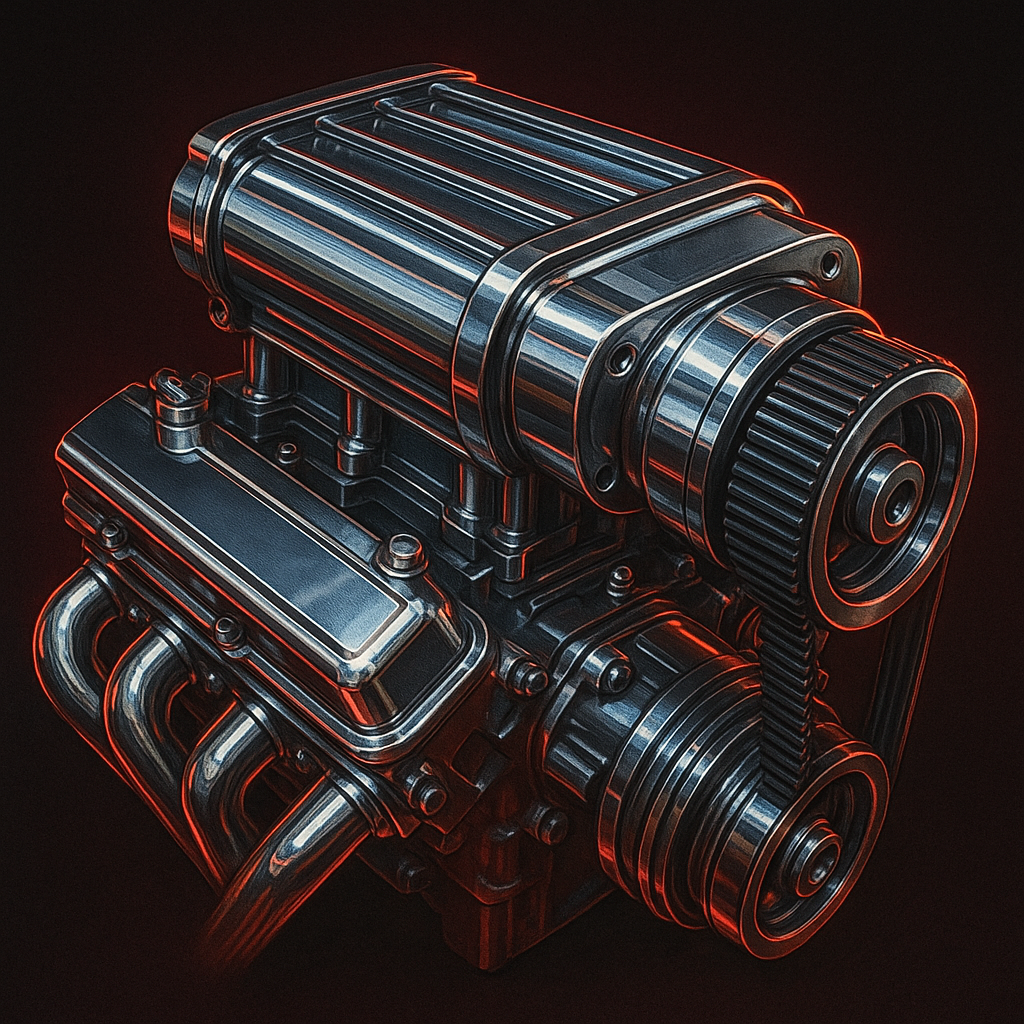
A supercharger is like a turbo’s older, louder, and more aggressive cousin. Instead of using exhaust gases, it’s powered directly by the engine’s belt, which means the power boost happens instantly — no delay, no waiting for boost. That’s why supercharged cars hit hard the moment you press the gas.
How It Works
The engine’s crankshaft belt spins the supercharger. Inside, it uses rotors or screws to compress incoming air. The compressed (high-pressure) air goes straight into the engine. More air = more fuel = instant extra power every time you press the pedal. Unlike a turbo, a supercharger doesn’t wait for exhaust gases — it’s always on, giving constant boost as long as the engine is running. Since it runs off the engine’s power, it’s a bit less fuel-efficient than a turbo.
Types of Superchargers
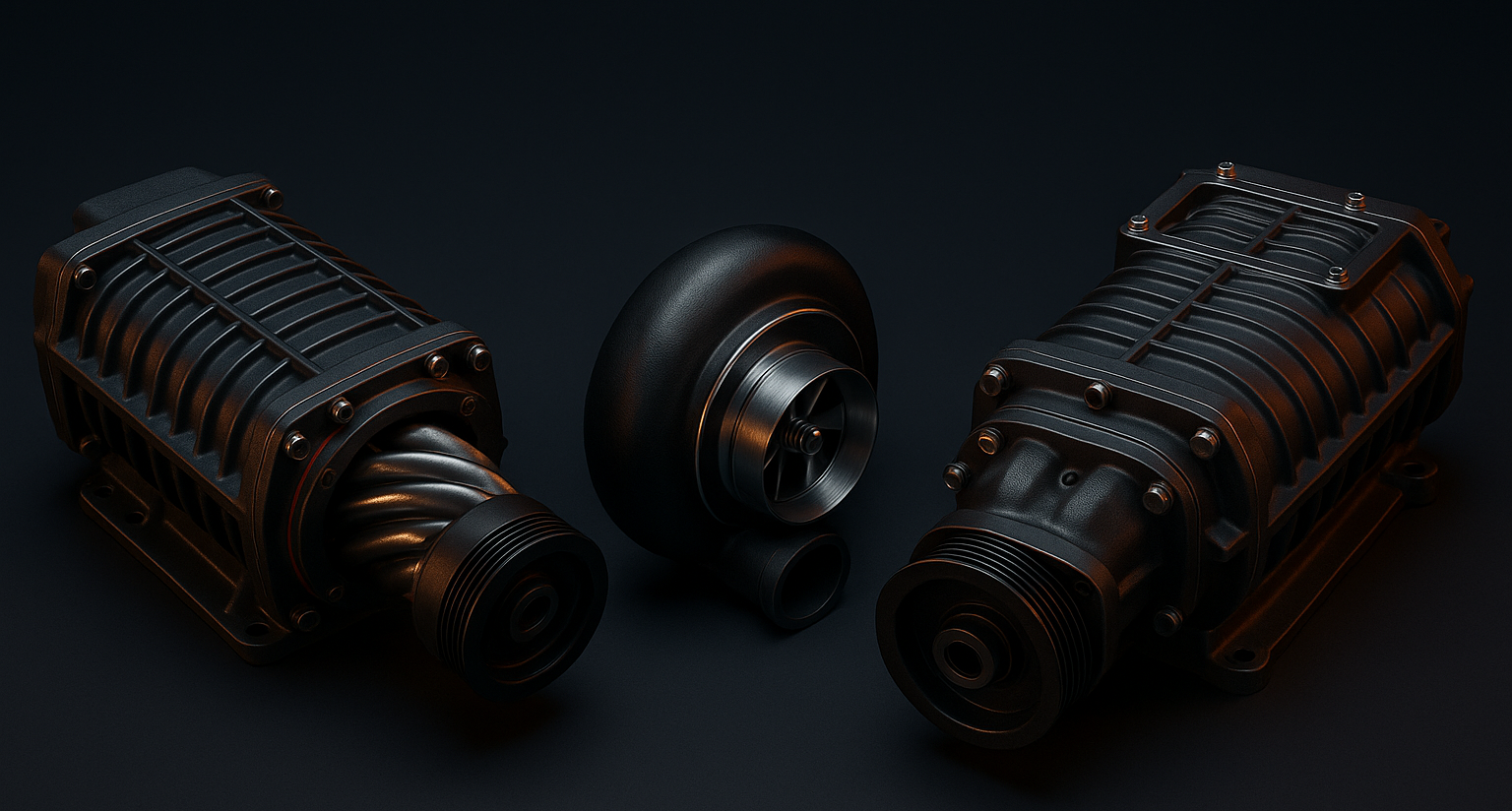
Screw
Looks similar to a Roots, but inside it’s smarter. Uses two spiral-shaped
rotors that compress the air inside the housing. More efficient, makes denser, cooler air,
and gives instant power too. Sounds smoother but still has that high-pitched whistle. Think
of it as an upgraded, modern version of the Roots supercharger.
Centrifugal
Works more like a belt-driven turbocharger. Uses a spinning impeller (fan) to suck and
compress air. Boost builds gradually with RPM — less power down low, but crazy top-end pull.
Smaller and lighter, often easier to install on compact engines. Think of it as a “supercharger
that feels like a turbo.”
Roots
The oldest and most iconic type (you’ve seen it
sticking out of muscle car hoods).Works like two interlocking gears that push air directly
into the intake manifold. Gives instant boost — no lag at all. But, it’s less efficient at high
RPM (creates heat and eats some power). Known for that classic whine sound and instant torque hit.