THE HEART OF THE CAR
The engine is where power is born. It’s the part of the car that converts fuel + air + spark = motion. Every time you hit the gas, hundreds of controlled explosions happen inside — that’s what drives your car forward.
Diagram of Engine
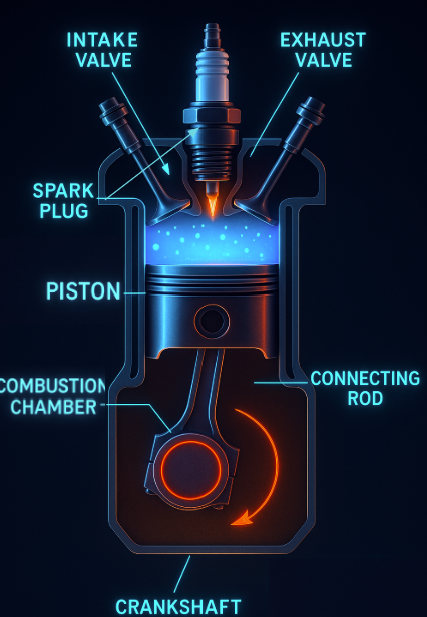
How the Engine Works
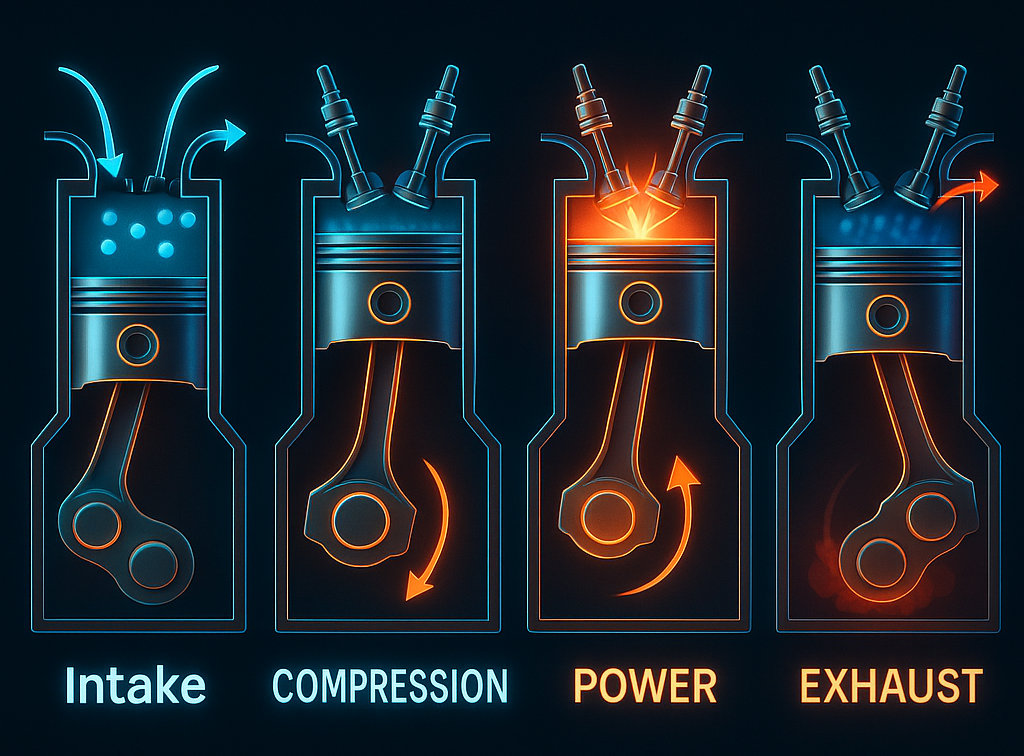
Intake
The intake valve opens, and the piston moves down, pulling in a mix of
air and fuel from the intake system.
Compression
Both valves close, and
the piston moves back up, compressing the air-fuel mixture tightly at the top of the
cylinder.
Power
The spark plug fires, igniting the compressed air-fuel
mixture. The explosion forces the piston downward, creating the power that turns the
crankshaft.
Exhaust
The exhaust valve opens, and the piston moves up again,
pushing out the burned gases through the exhaust system.
After this, the cycle
repeats—thousands of times per minute—powering the engine smoothly and efficiently.
Some Types of Engines
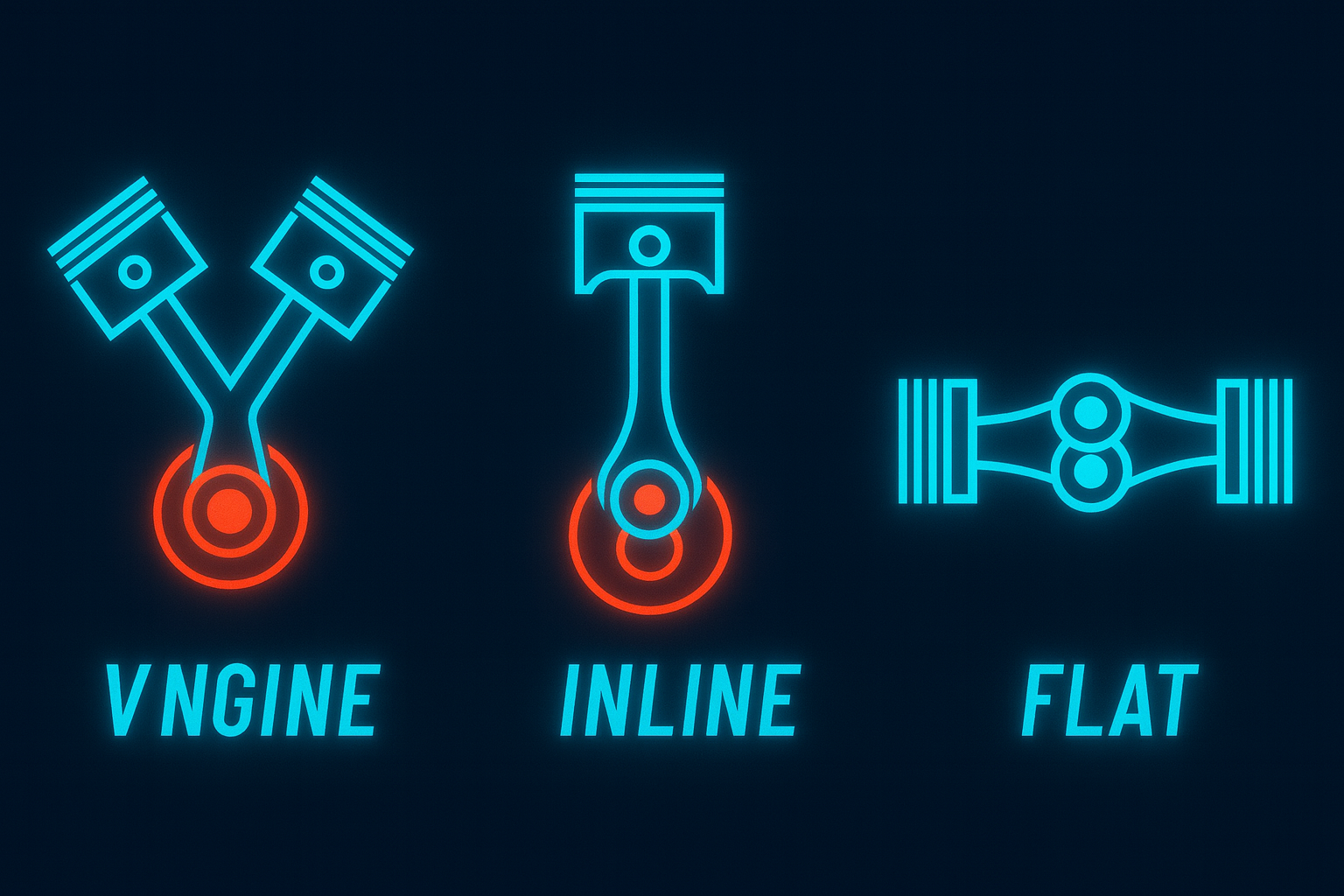
Inline
All cylinders are in one straight line, and the pistons move up and
down together.Example: Inline-4 has 4 cylinders in a row.
V Engine
Cylinders are split into two angled rows forming a V shape, both sides share one crankshaft.
Example: V6 has 3 V's in a row
Flat
Cylinders are laid flat and opposite
each other, moving side to side. Example: A Flat-4 engine has 4 cylinders lying flat — 2
on the left side and 2 on the right side, opposite each other.